.svg)

Quick summary
Brand and trust
Ready Card is built by the pioneers formerly known as Argent. Operating since 2018 with zero hacks, it offers a level of proven security that newer platforms simply cannot match.
Where your money lives
To use RedotPay, you have to actively move your crypto out of your own wallet and deposit it into their centralized platform. With Ready Card, your money stays exactly where it is—in your everyday wallet.
Safe and separate spending
Ready Card's smart spending approvals ensure the card can only ever touch your "digital cash" (USDC). The rest of your crypto investments remain completely invisible to the payment network.
Fees and travel
RedotPay charges a 1% crypto conversion fee, a 1.2% foreign exchange fee, and a 2% ATM fee. Ready Card gives you 0% foreign exchange fees, zero conversion fees, and generous free ATM limits right out of the box.
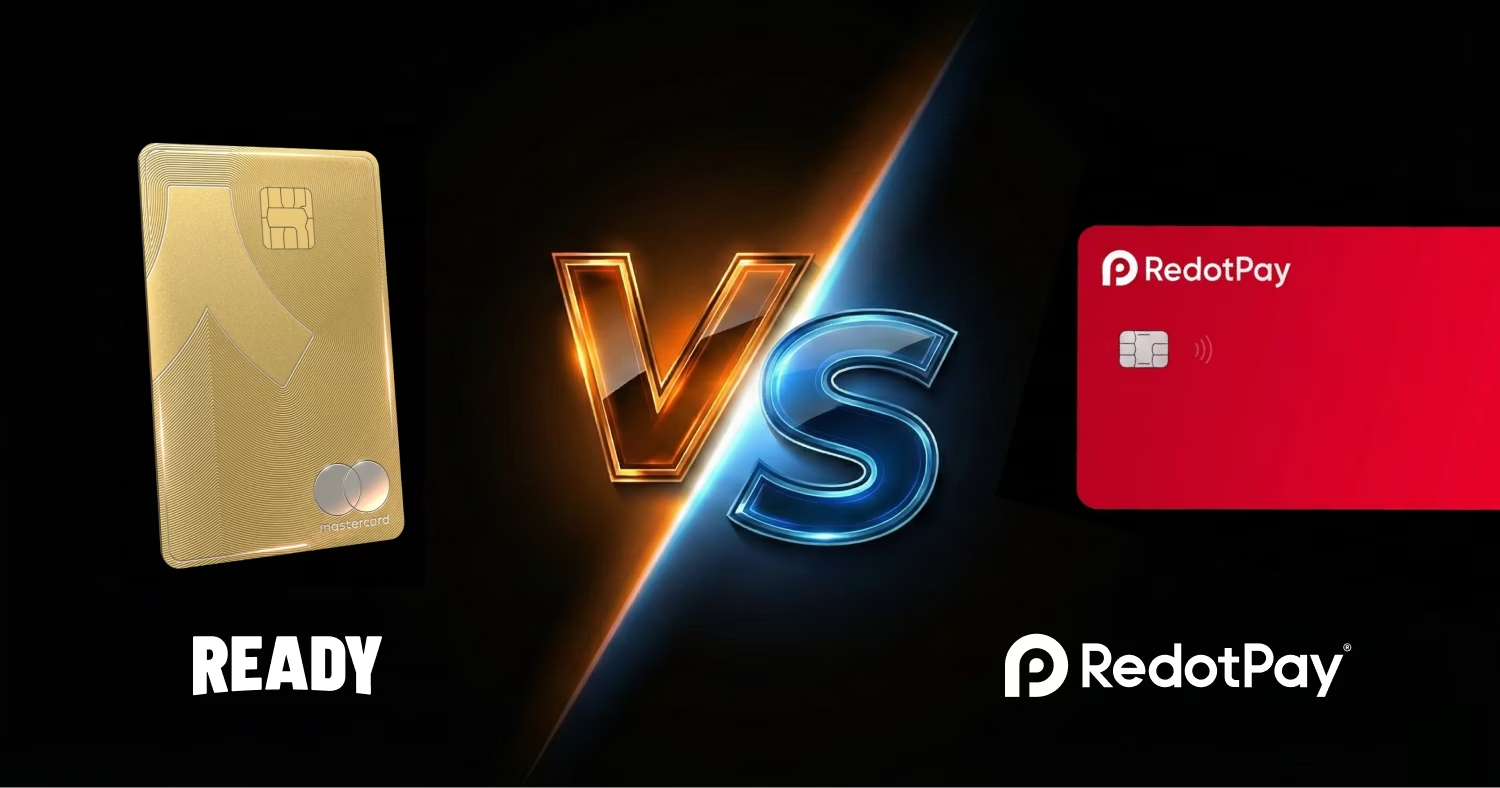
Ready Card & RedotPay compared
| Ready Metal | Ready Lite | RedotPay | |
|---|---|---|---|
| Cashback | 3% | 0.5% | No cashback |
| Cashback requirements | None | None | No cashback |
| Upfront cost | $120 / year | Free | $10 virtual / $100 physical |
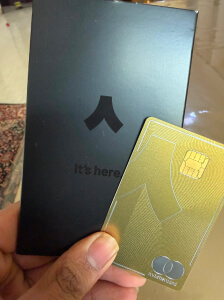
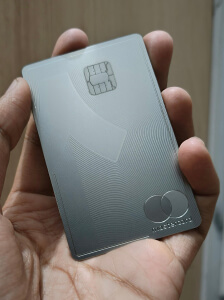
| Card type | Metal + Virtual | Plastic + Virtual | Plastic + Virtual |
| Fully self-custodial | Yes  | Yes | No  |
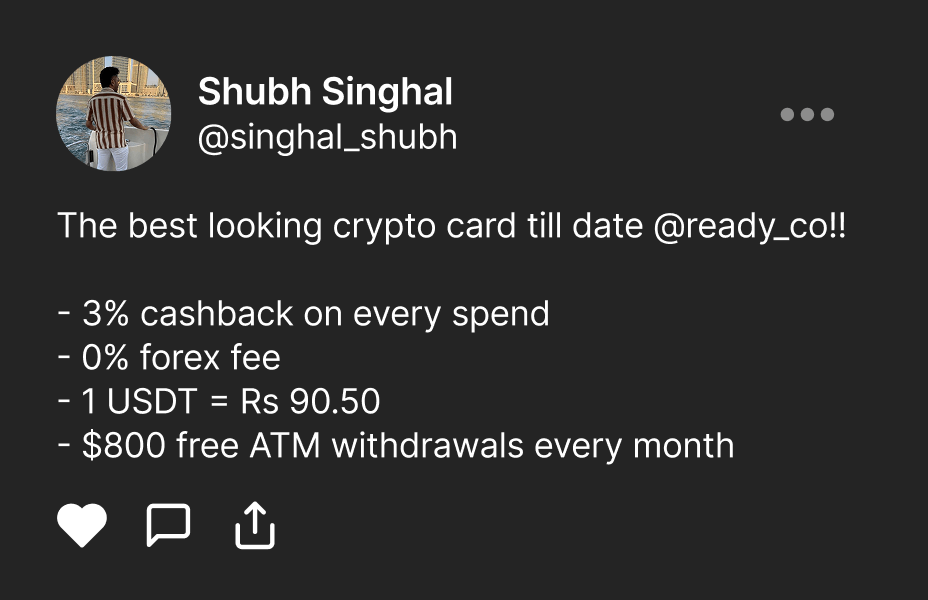
| Free ATM withdrawals* | $800 / month | $200 / month | No (2% fee) |
| Fee-free foreign exchange | Yes | Yes | No |
| Perks | Yes | Yes | No |
| Brand history & security | Since 2018 (Zero hacks) | Since 2018 (Zero hacks) | Since 2023 |
*Free withdrawals means that the card provider (e.g. Ready) does not charge any fees up to the limit. But the ATM provider may still charge a fee.
Ready Card vs RedotPay: High limits vs hidden fees
When choosing a crypto debit card, users often have to weigh up convenience against fees, and spending limits against security. Ready Card and RedotPay cater to two very different types of crypto users.
The good about RedotPay
RedotPay has carved out a distinct niche for itself by focusing heavily on global accessibility and sheer volume. It caters explicitly to users who need to move massive amounts of capital, offering staggering transaction limits and over $100,000 in monthly ATM withdrawal allowances. If your primary goal is moving huge sums of crypto into cash and you are willing to pay heavy premiums to do so, RedotPay serves that specific need well.
The Ready Card advantage: Digital cash without the heavy fees
While RedotPay is built for extreme limits, it brings a very heavy fee structure to everyday spending. On top of charging $100 just to order a physical card, they charge a 1% crypto conversion fee, a 1.2% foreign exchange fee, and a 2% fee at the ATM. They even charge "micro-fees" if your transactions are too small or if your card gets declined.
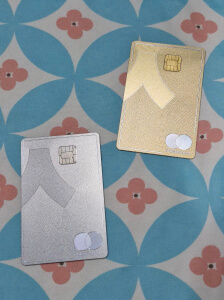
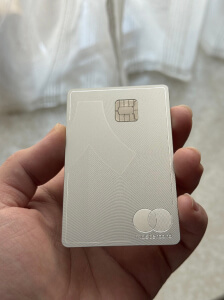
Ready Card is designed for people who just want to spend their crypto easily and affordably. There are no top-up accounts and no hidden fees. Built by the trusted team formerly known as Argent, Ready Card lets you spend your "digital cash" directly from your main wallet. The free Ready Lite tier gives you 0% foreign exchange fees, zero crypto conversion fees, and free ATM limits straight away, making it the smarter choice for travel and everyday life.
The clincher: Smart spending and absolute peace of mind
Trust and security are the most important features of any crypto card. Ready Card has been operating since 2018 with zero hacks – an incredibly rare credential in a space where newer platforms frequently face growing pains.
But the biggest difference is how they protect your money. RedotPay operates a traditional custodial model. You must hand over control of your crypto, depositing it into their centralized platform where you are exposed to third-party risk.
Ready Card flips this outdated model on its head by keeping your funds exactly where they belong: in your main Ready Wallet. Instead of moving your money into a separate platform, Ready Card uses smart spending approvals. This means the card is only granted permission to touch your "digital cash" (USDC). Your Bitcoin, Ethereum, and other investments remain safely walled off and untouchable by your card. If you ever lose the card, you can cut off its access with a single tap.
It’s the ultimate combination: the proven reputation of a Web3 pioneer, the ease of spending digital cash, and zero hidden fees eating into your wealth.